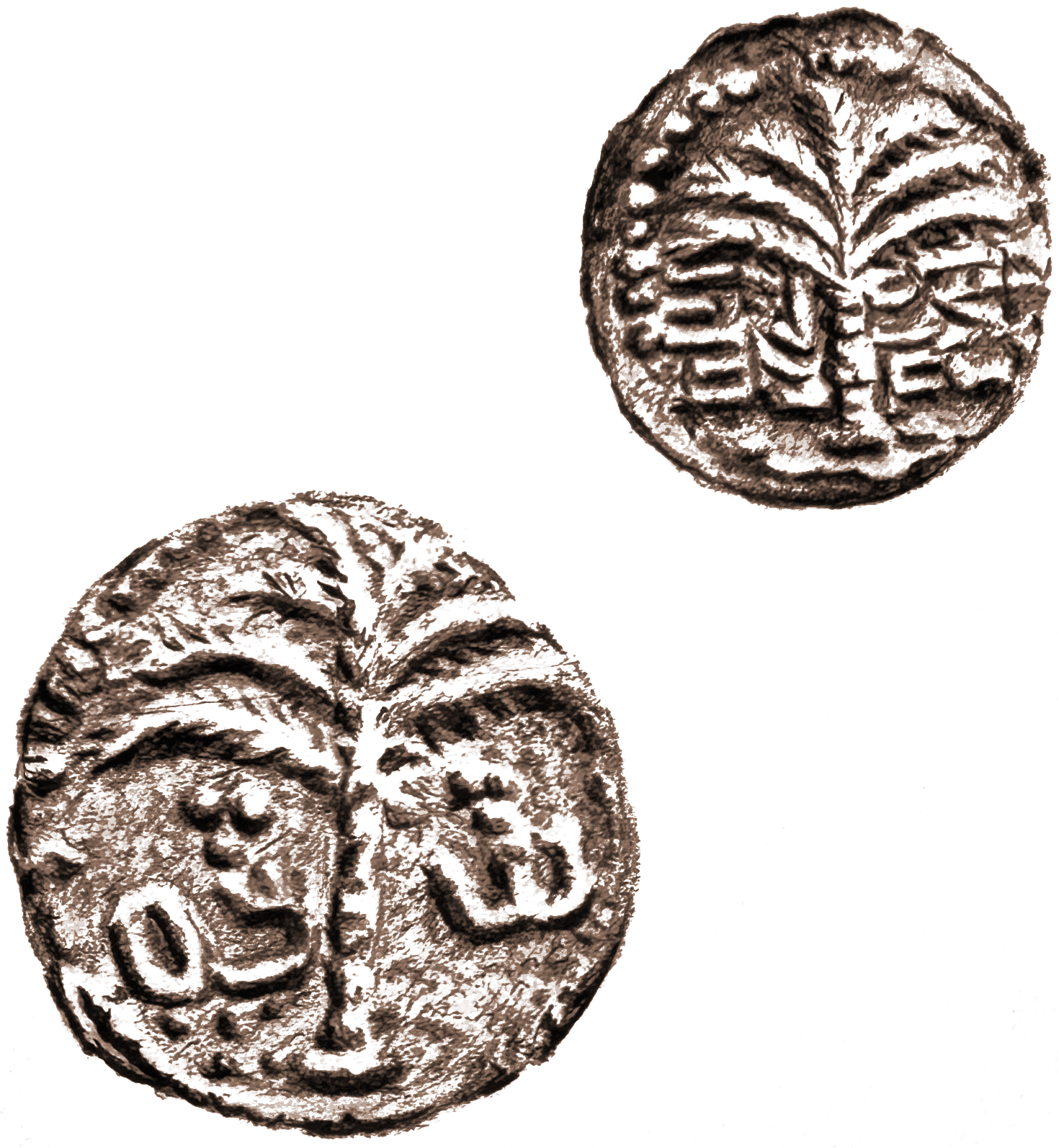
Excerpts from “The Date Palm, Bread of the Desert,” Hilda Simon, 1978. Depicted above:
Two bronze coins depicting the date palm. (From the 2nd Jewish Revolt, A.D. 132-135)
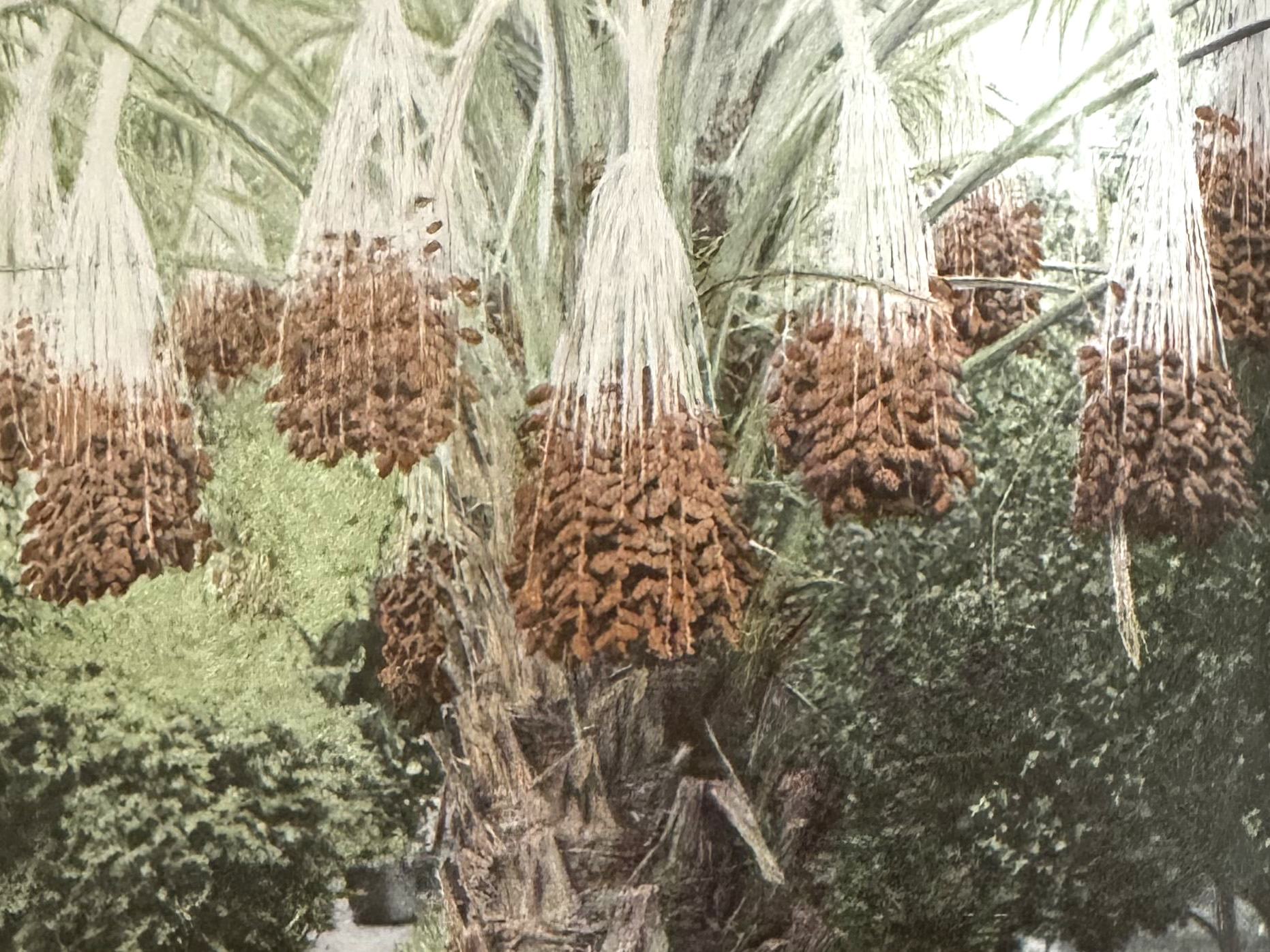
Dates were used in a variety of ways in antiquity, a favorite being a kind of “honey,” or syrup, made from soft pressed dates. Biblical references to honey, such as the one about the “land where milk and honey flows,” are believed by historians to refer to this “date honey” rather than to the product of honey bees.
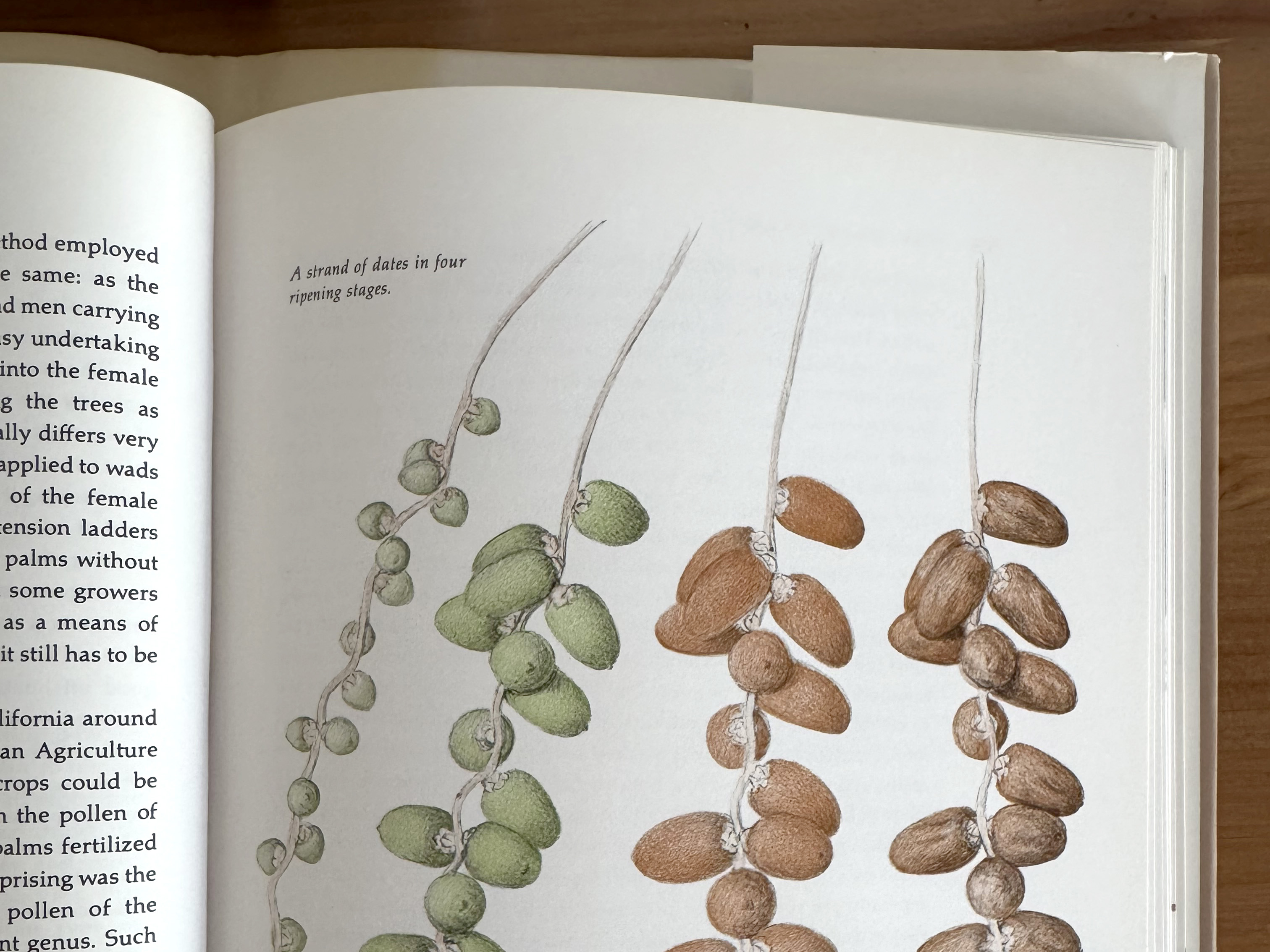
Cultivation of date palms is a different matter entirely, and cannot be achieved by such simple methods, for here really nothing can be left to nature- except the ripening of the fruit by the sun- if an ample, top-quality crop is desired. Man has to attend to everything, from special care while planting the young, rootless offshoots and protecting them against the hot sun and wind, to irrigating and pollinating the mature trees, and even sometimes shielding the fruit against an occasional rainfall during the long ripening period. […] Once established and properly treated, date palms will bear fruit- several hundred pounds of it- year after year for many decades.
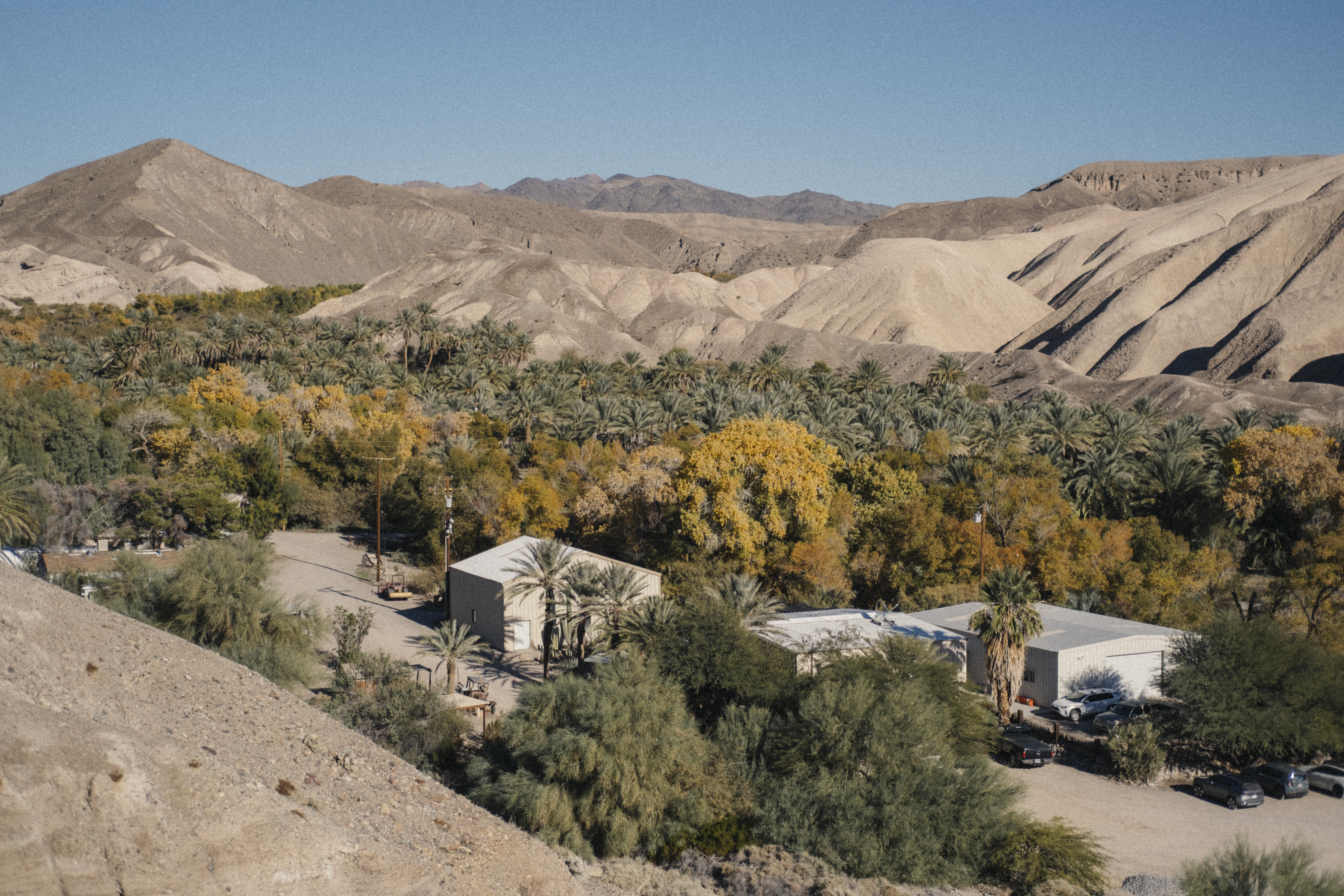
I had never really considered dates and their origins until visiting China Ranch Date Farm, by chance, on the way to Death Valley last winter. A man working at Kit Fox Cafe passed along the tip.